From Optical Flow to Neural Scene Flow: Video Understanding for 3D
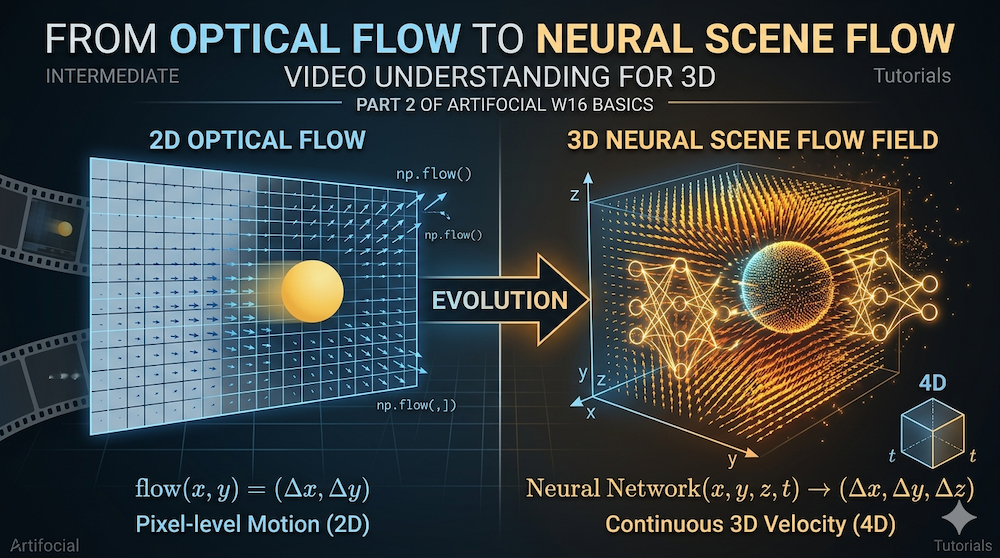
How motion estimation evolved from pixel-level optical flow to neural scene flow fields — and why it matters for reconstructing dynamic 3D worlds from video.
9 posts found

How motion estimation evolved from pixel-level optical flow to neural scene flow fields — and why it matters for reconstructing dynamic 3D worlds from video.

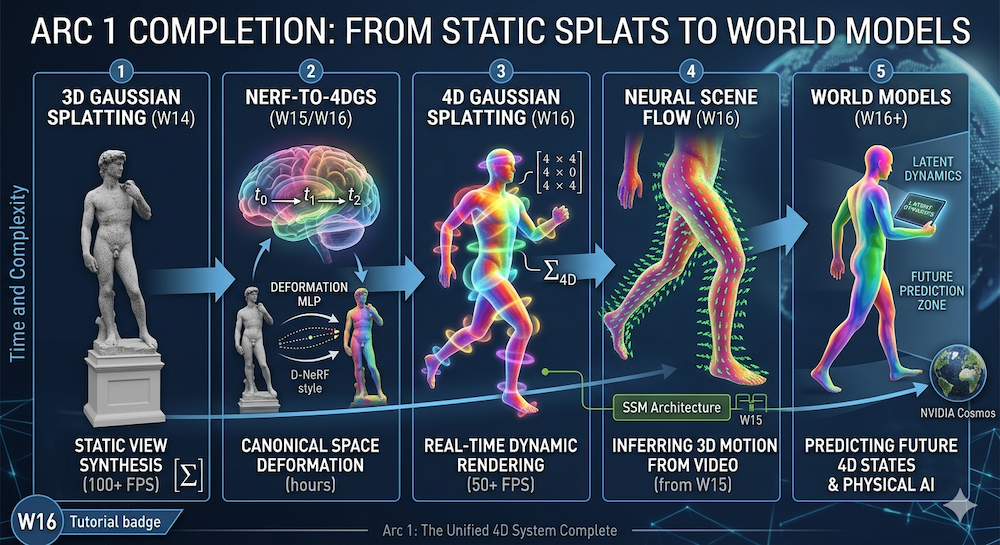
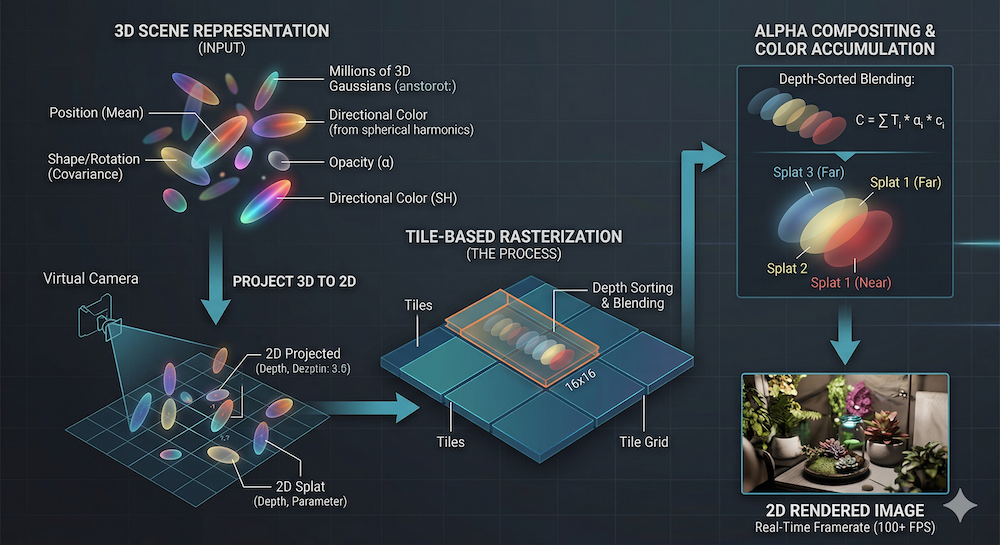
A step-by-step introduction to 4D Gaussian Splatting — how adding a time dimension to 3DGS enables real-time dynamic scene rendering, from deformation fields to temporal regularization.

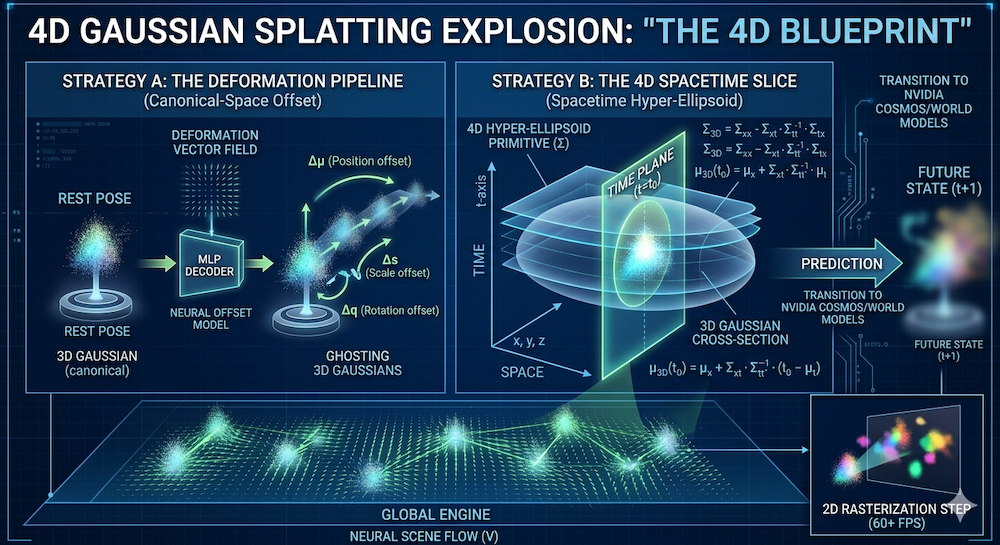
How 4D Gaussian Splatting extends real-time radiance fields into the time domain — deformation fields, temporal regularization, neural scene flow, and the path to dynamic world models.

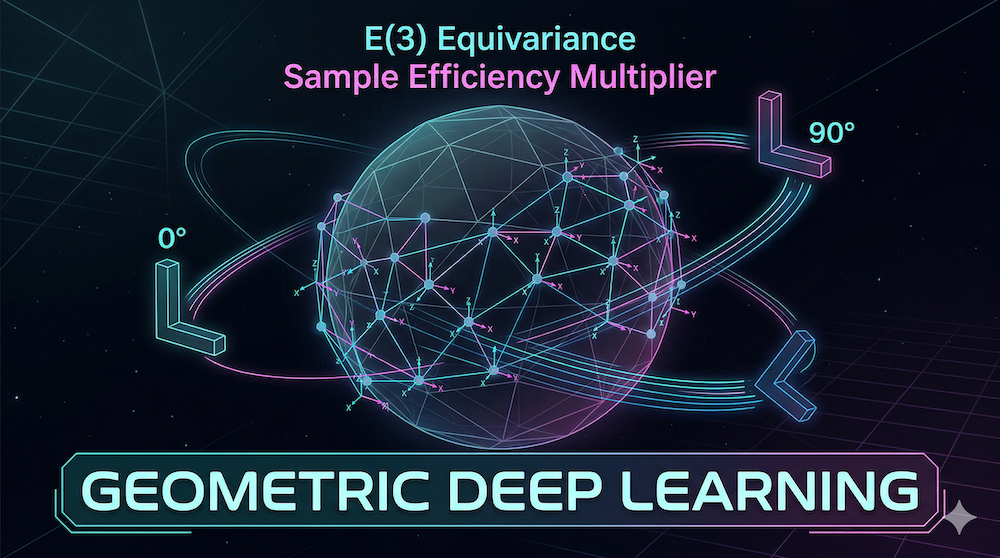
A tour of the architectures that bake 3D geometry into the network itself—from Hinton's capsules and the geometric deep learning framework to modern E(n)-equivariant graph networks powering physical AI.

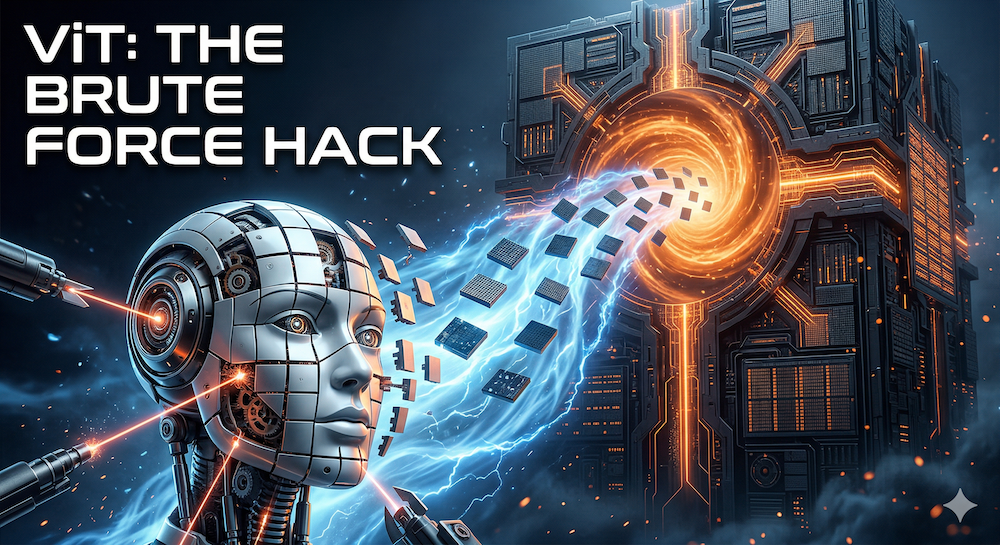
Understand the elegant trick that let transformers process images, why it surprisingly works, and why its fundamental limitations drive the next generation of vision architectures.

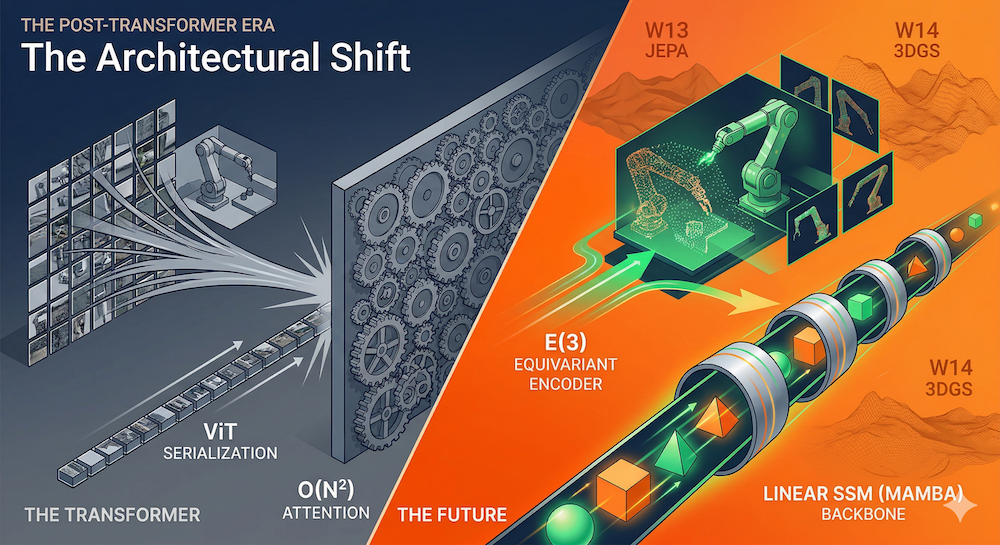
Survey the post-transformer frontier—state space models, recurrent revivals, long convolutions, and equivariant networks—and see why the architectures that will power physical AI look nothing like a stack of attention layers.

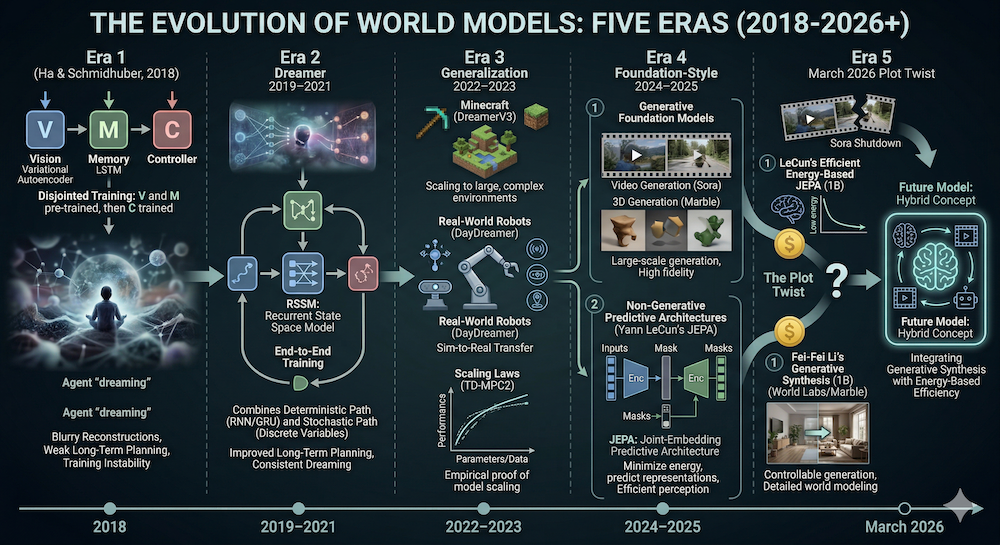
Trend tutorial on World Models -- focusing on Worldlabs' Marble

World Models: evolution and connection to RSI

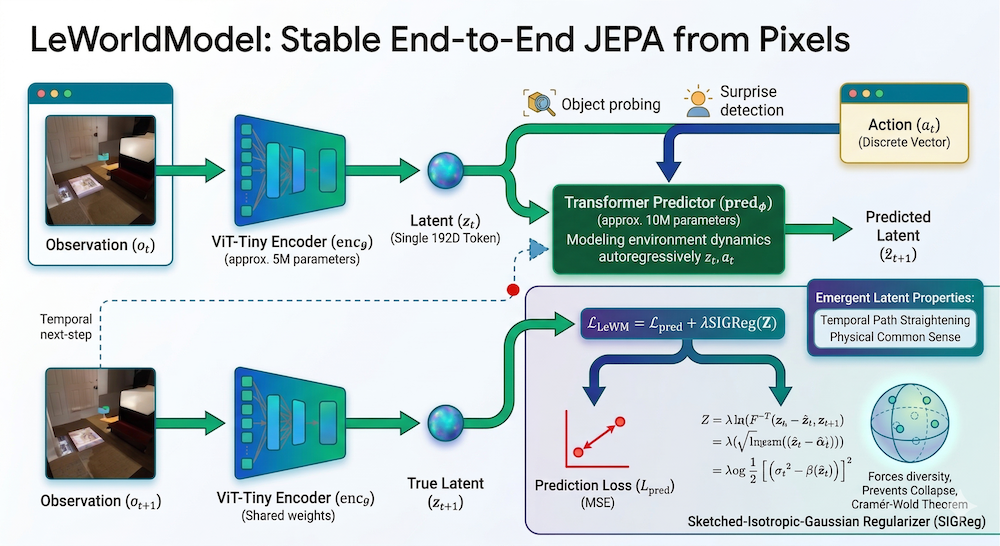
Trends of Energy-based World Models